

Learning to Trust Without Becoming a Fool
"Trust is a confident relationship with the unknown"

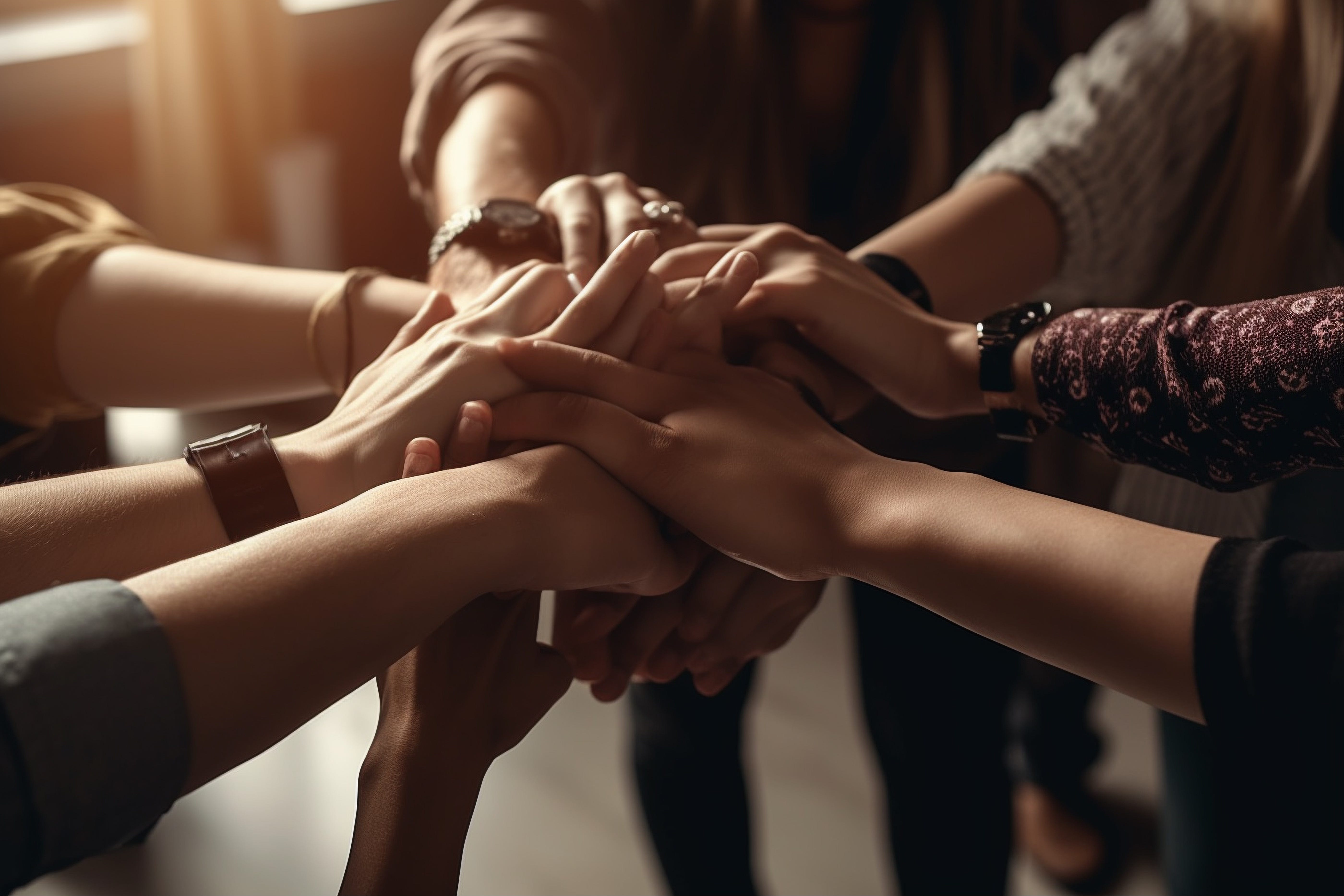
Image by Aleksander Polanowski
Rachel Botsman gives us a useful sentence for an anxious age: “Trust is a confident relationship with the unknown.” She doesn’t define trust as certainty, loyalty, liking someone, or reassurance from a familiar logo. Trust begins exactly where certainty ends. It’s the connection between what we know and what we can’t yet know.
That’s why trust can be so difficult.
We’re asked to trust individuals who may disappoint us, organizations that may reduce us to mere account numbers, and institutions that may be hollowed out by ambition, ideology, cowardice, or neglect. We’re asked to trust news, medicine, courts, schools, churches, charities, experts, neighbors, elections, systems, and ourselves. Meanwhile, the modern world has become very good at counterfeiting authority. The confident voice is not always the truthful voice. The polished institution isn’t always the trustworthy institution. The person who says “believe me” may be precisely the person who hasn’t earned nor deserves belief.
So the question becomes: How do we become aware enough to trust wisely?
There’s a difference between innocence and wisdom. Innocence trusts because it hasn’t been hurt yet. Cynicism refuses trust because it’s been hurt and doesn’t want to be hurt again. Wisdom learns to stand somewhere in between. It doesn’t hand the house keys to the first smiling stranger. But neither does it bolt every door and call the resulting loneliness “safety.”
We might consider real trust to be a disciplined form of confidence.
Thomas Merton might have said that part of our difficulty begins in the false self: the public costume, the defensive posture, the frightened little manager inside us who wants guarantees before taking a step. The false self wants control. It wants immunity from embarrassment, betrayal, and grief. But no such immunity exists. The true self, quieter and less theatrical, knows that life can’t be made risk-free. It can only be made more honest.
That honesty begins with a sober admission: some people aren’t trustworthy. Some organizations aren’t worthy of our confidence. Some institutions have failed, and some are being intentionally damaged. This kind of clear eyesight is especially important these days.
By the same token, eyesight mustn’t become blindness in the other direction. If betrayal teaches us that no one can be trusted, betrayal has taken more than it deserved. If institutional failure teaches us that all institutions are useless, then the saboteurs have won twice: first by damaging the structure, and again by persuading decent people to abandon it.
Timothy Snyder reminds us that institutions don’t defend themselves. His advice isn’t sentimental. He reminds us to choose institutions we care about and take their side, because institutions that preserve decency need human beings to act on their behalf.
That’s a hard teaching. It asks us to stop speaking of “the courts,” “the press,” “the schools,” “the unions,” “the libraries,” “the churches,” “the nonprofits,” or “the government” as though they were weather systems passing over us. Institutions comprise people, habits, rules, memory, courage, paper, budgets, procedures, and public expectation. They rot when scoundrels attack them. They also rot when decent people decide they’re too disappointed to care.
This means we owe careful attention to the difference between reform and destruction.
The same is true in personal life. A person who’s been hurt may believe the safest life is one in which no one is given much room to matter. But we weren’t built to live sealed off from one another. The Concord Transcendentalists, for all their bracing emphasis on self-reliance, didn’t preach isolation. Emerson’s self-reliance wasn’t a command to distrust the world. It served as a call to stand upright within it. Thoreau’s retreat to Walden wasn’t a rejection of society so much as a cleansing of perception. He went to the pond to see what was real.
We might do the same with trust.
We can begin by asking: What strengths do I already have that could help me trust more wisely?
Some people have the strength of patience. They don’t need to decide everything at once. That’s a gift. Trust often grows best under observation, not pressure.
Some have the strength of pattern recognition. They notice whether words and actions line up. They remember how someone behaved when there was nothing to gain. They watch what happens when a person is corrected, inconvenienced, or denied.
Some have the strength of warm welcoming. They can keep a door open without surrendering the house.
Some have the strength of questioning. In its healthy form, skepticism is simply due diligence. It asks for evidence. It reads the fine print, checks whether the glowing mission statement has a payroll, a practice, and a history behind it.
Some have the strength of repair. These are the people who can say, “That hurt me,” or “I got that wrong,” or “Can we try again?” No relationship can mature without repair. No institution can regain trust without admitting damage and changing behavior.
Some have the strength of courage. They can stay present in uncertainty without demanding a false certainty to calm their nerves.
That may be the heart of the matter. Trust is a way of carrying uncertainty without letting it deform us.
Ian Leslie’s work on disagreement is useful here. He argues that the point isn’t to stop arguing, but to disagree in ways that help people think better, decide better, and sometimes come closer rather than farther apart. A trustworthy person won’t agree with us all the time. A trustworthy organization won’t avoid conflict by smothering dissent. A trustworthy institution isn’t one that never makes a mistake. Trustworthiness is revealed through how people and systems behave under strain.
Do they explain themselves?
Do they correct mistakes?
Do they allow challenge?
Do they protect the vulnerable?
Do they tell the truth when the truth is expensive?
Do they keep faith when no one is applauding?
These questions help us move from emotional trust to calibrated trust. Calibrated trust is trust with a dimmer switch. It doesn’t live only in the extremes of “I trust completely” or “I trust not at all.” It allows degrees. I may trust this person with my feelings but not my finances. I may trust this organization’s local workers but not its leadership. I may trust an institution’s purpose while opposing its current corruption. I may trust a process enough to participate in it, while still working to improve it.
That isn’t hypocrisy. It’s adulthood.
Steven Johnson, in writing about where good ideas come from, has emphasized that innovation often comes out from “liquid networks,” slow hunches, and environments where ideas can connect. Trust works similarly. It grows in networks of repeated evidence. It grows when people show up, tell the truth, make room, share credit, and stay accountable. It grows when institutions are transparent enough to be examined and humble enough to be corrected.
Trust also grows locally before it grows nationally. We may not be able to repair the whole republic before breakfast. But we can strengthen the small republic of the kitchen table, the board meeting, the classroom, the volunteer group, the town library, the local paper, the neighborhood conversation, the nonprofit that still knows people by name.
That’s where our strengths become civic tools.
The patient person can slow the panic.
The organized person can keep records.
The generous person can connect neighbors.
The skeptical person can ask the necessary question.
The articulate person can write the letter.
The steady person can attend the meeting.
The kind person can keep the room from becoming cruel.
The brave person can say, “No, that’s just not true,” when silence would be easier.
None of this requires us to become naïve. In fact, it requires the opposite. It requires us to become more awake. Trustworthy living depends on a clear view of human frailty, including our own. We should expect imperfection. We shouldn’t excuse corruption. We should allow people to grow. We shouldn’t allow them to repeatedly harm others while calling our patience a virtue.
Merton’s contemplative life was never an escape from the wounded world. The Concord stream was never merely pretty talk beneath trees. Snyder’s civic warnings aren’t abstractions. Botsman’s definition isn’t a slogan for consultants. Taken together, they point toward a practical discipline for the rest of us:
Don’t trust blindly.
Don’t distrust lazily.
Do the work of discernment.
Trust the trustworthy more.
Trust the untested slowly.
Trust the damaged conditionally.
Trust the cruel not at all.
And trust yourself enough to keep learning.
There’s a kind of peace that comes from alignment (rather than certainty). We might not know whether every person, organization, or institution will prove worthy. We can’t know in advance how every story will end. But we can know what kind of person we intend to be inside the uncertainty.
We can be watchful without becoming hard.
Open without becoming careless.
Disappointed without becoming faithless.
We can be strong enough to repair what can be repaired, oppose what must be opposed, and walk away from what has become poisonous.
Trust is a confident relationship with the unknown.
Confidence doesn’t mean we know what will happen.
It means we have decided not to let the unknown make cowards of us.
Brilliant! This is very accurate, thorough and thoughtful.
Always wise advice. Thank you.